16 Ways Kids and Teens Can Earn Real Money (And What Each One Teaches)
Some links may be affiliate links. We may earn a commission at no extra cost to you. View our full disclosure.
Ask adults where their money habits came from, and the stories are never about a class. They’re about the lemonade stand. The paper route. The summer the neighbor paid five dollars for a washed car and something clicked.
Kids don’t learn money from lectures. They learn it from earning it, spending it badly once, and earning it again.
That’s the case for this list: 16 age-appropriate ways kids and teens earn real money, counted down to the one that teaches the most per dollar, each with realistic earnings and the lesson quietly hiding inside.
The parent ground rules first, because they apply to every entry: adult supervision scales with age, door-to-door happens with a grown-up or in known-neighbor territory only, anything online runs through a parent’s account, and once real jobs enter the picture, teen labor laws on ages and hours vary by state and get checked first. Safety outranks earnings on every line below.
With that said: it’s a great time to be twelve with a work ethic.
16. The Refreshment Stand
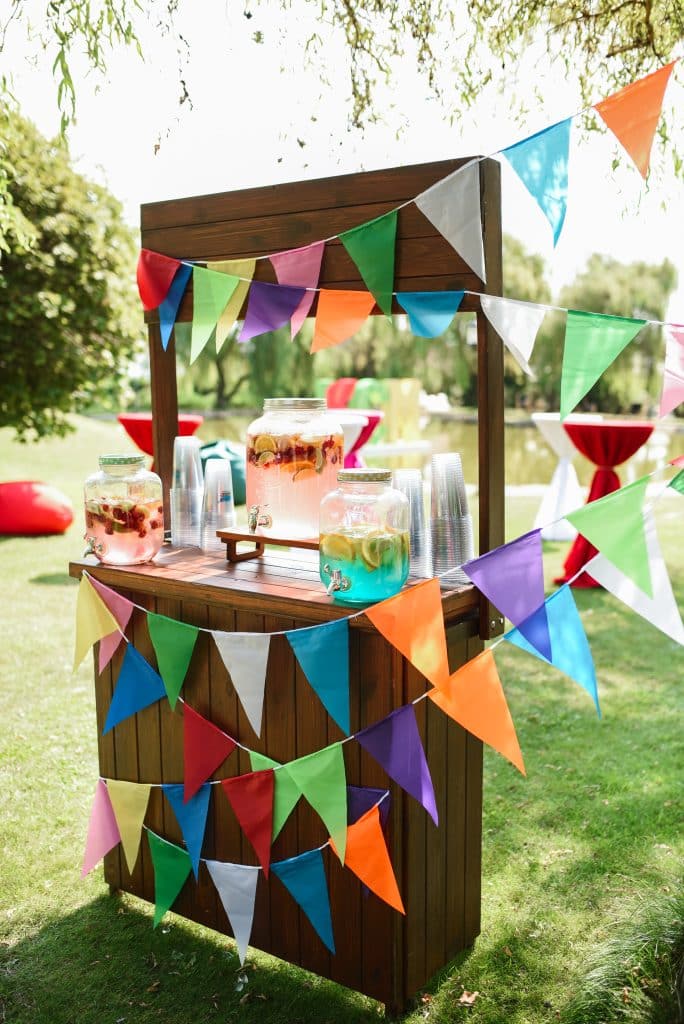
The classic, still undefeated as a first business: lemonade, cookies, cold water bottles at the yard sale or the youth soccer sideline.
Earnings are modest, $10 to $40 on a good day, and beside the point.
The lesson is the whole curriculum in miniature: supplies cost money, prices are decisions, smiling sells, and profit is what’s left, not what came in. A seven-year-old who learns “revenue isn’t profit” is ahead of a startling number of adults.
Quick Facts
- Good ages: 6 to 10, with a grown-up nearby
- Realistic earnings: $10 to $40 per event day
- The lesson inside: costs, prices, and profit are three different things

15. Car Washing
The neighbor-driveway version, not a business with a hose license: $10 to $20 per car, known neighbors only, and the discovery that thoroughness is visible.
The half-washed car gets no repeat customer. The vacuumed-mats surprise gets one for life.
Quality as a habit, taught by soap.
Quick Facts
- Good ages: 10 and up
- Realistic earnings: $10 to $20 per car, repeat customers are the game
- The lesson inside: the extra effort is the marketing

14. Yard Work Basics
Raking, weeding, watering, leaf bagging: the entry-level tier of our neighborhood-services article, staffed by the neighborhood’s actual youth.
$15 to $30 per yard job at kid scale, seasonal demand on schedule, and the first taste of a truth from that article: showing up when promised makes you mildly famous.
Mowing waits for the age and training the equipment demands. The rake teaches the same economics with none of the blades.
Quick Facts
- Good ages: 10 and up for hand tools, older for anything with an engine
- Realistic earnings: $15 to $30 per yard session
- The lesson inside: reliability is the product, the rake is just the prop

13. Snow Shoveling
The weather-triggered classic: $15 to $40 per driveway at kid rates, a route of three or four known neighbors, and money that literally falls from the sky.
The lesson is opportunity cost in its purest form: the kids who go out in the cold earn, and the warm ones don’t, and everyone can see which choice they made by breakfast.
|
Money Stuff
47 "Bad" Money Habits You Don't Need to Feel Guilty About
|
Add the senior neighbor done free, and a second lesson rides along quietly.
Quick Facts
- Good ages: 11 and up, with layers and limits
- Realistic earnings: $15 to $40 per driveway, storms permitting
- The lesson inside: showing up when it’s hard is the whole margin

12. Mother’s Helper
The babysitting on-ramp: a younger kid, 10 to 12, entertains little ones while a parent stays home working in the next room.
$8 to $12 an hour, real responsibility with a safety net, and the resume-building that makes full babysitting possible later.
For the youngest earners, it’s the first experience of being paid for attention and patience, which is what most adult jobs secretly are.
Quick Facts
- Good ages: 10 to 12, parent on premises
- Realistic earnings: $8 to $12 an hour
- The lesson inside: responsibility is granted in steps, earned each time

11. Babysitting, Certified
The classic teen earner, upgraded by one move: a babysitting and child-safety certification course, offered through community organizations and local hospitals, often around ages 11 to 13.
Certified sitters book first and charge more, $12 to $20 an hour at teen rates in many areas, per the childcare shortage our main side-income ranking documented.
The lesson is credentials economics: a Saturday of training changed the rate forever. That one clicks hard, and it’s supposed to.
Pro Tip: Parents, front the course fee as a loan repaid from the first jobs. The repayment is a second lesson wearing the first one’s clothes.
Quick Facts
- Good ages: 12 and up for solo sitting, local norms vary
- Realistic earnings: $12 to $20 an hour, certified rates
- The lesson inside: training is an investment with a visible return

10. Pet Care Junior
Dog walking with parent-approved clients, vacation feeding visits, and the fish-and-plants tier for beginners: $5 to $15 per visit at kid scale.
The clientele is the trust network from our neighborhood-services article, in miniature: known families, keys handled ceremoniously, notes left after visits.
The lesson is that other people’s trust is a real asset, slow to build and instant to lose, and that a goldfish’s life is a genuine responsibility. Both stick.
Quick Facts
- Good ages: 10 and up with parent-vetted clients
- Realistic earnings: $5 to $15 per walk or visit
- The lesson inside: trust is the currency, the leash is incidental

9. Tech Help for Grandfriends
The kid version of our neighborhood tech-help entry, and honestly sometimes the better one: patient help with phones, photos, video calls, and TV settings for grandparents and their friends.
$10 to $20 per session at family-friend rates, endless renewal, and the discovery that knowledge they consider worthless is worth actual money to someone else.
That insight, your normal is someone’s valuable, is the seed of every skill-based income on this site. Plant it early.
Quick Facts
|
Worth It or Not
19 Household Items You're Replacing Way Too Often
|
- Good ages: 11 and up, they were born qualified
- Realistic earnings: $10 to $20 per session
- The lesson inside: value is relative, and patience is billable
[Suggested tall image: teenager helping an older adult with a smartphone at a kitchen table, warm vertical shot]

8. Homework Help and Tutoring
Older students tutoring younger ones: math facts, reading practice, instrument basics, at $10 to $25 an hour depending on age and subject.
It’s the junior version of our main ranking’s tutoring entry, with the same clean economics: knowledge already in their head, converted to income and reinforced by the teaching.
The lesson doubles as a secret: explaining something is the strongest way to learn it. The tutor’s own grades tend to rise, which nobody expects and everybody enjoys.
Quick Facts
- Good ages: 13 and up, two grade levels above the student
- Realistic earnings: $10 to $25 an hour
- The lesson inside: teaching pays twice, once in cash and once in mastery
7. Reselling Outgrown Everything
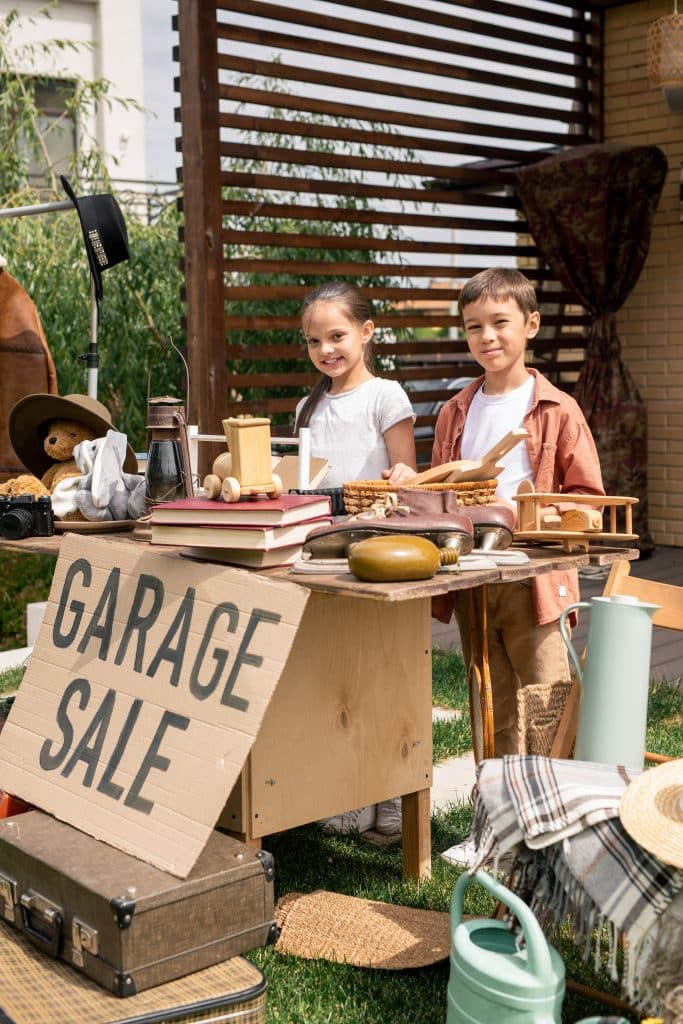
The kid edition of our what’s-in-your-house guide: outgrown video games, LEGO by the pound, sports gear, and clothes, photographed and sold through a parent’s marketplace account, kid doing the work, kid keeping the proceeds per the family’s split.
The earnings surprise everyone, $50 to $200 per serious closet sweep, and the lessons stack three deep: things hold value, condition determines price, and the market, not the seller, decides what something is worth.
That last one arrives the day their treasured item fetches $4. Let it arrive. It’s tuition.
Quick Facts
- Good ages: 12 and up, parent handling the account and handoffs
- Realistic earnings: $50 to $200 per closet campaign
- The lesson inside: the market’s opinion is the only one that pays

6. Craft and Bake Sales
The maker tier: bracelets, baked goods, art prints, holiday ornaments, sold at school fairs, community markets, and the family’s craft-fair table from our holiday-earning guide.
Baked goods run through the same cottage-food-law check as the adult version, parent-supervised. Earnings are honest hobby-tier, $20 to $100 per event.
The lesson is pricing labor: the bracelet took an hour, so what’s the hour worth? Watching a kid reason through that question is watching a future freelancer calibrate.
Quick Facts
- Good ages: 8 and up with help, teens solo
- Realistic earnings: $20 to $100 per fair or sale
- The lesson inside: your time has a price, and you set it

5. Youth Sports Officiating
The surprise of the list, straight from our main side-income ranking: youth leagues certify referees and umpires young, often 12 to 14 for the littlest divisions, at $20 to $50 per game.
Games stack on Saturdays, the shortage is national, and the pay embarrasses most teen jobs.
The lesson is composure under criticism: the sideline parents from the adult version of this entry don’t soften for a 14-year-old ref. Kids who learn to make a call and stand calmly behind it have learned something schools can’t teach.
Quick Facts
- Good ages: 12 to 14 and up, league certification required
- Realistic earnings: $20 to $50 per game, games stack
- The lesson inside: decisions under pressure, defended with calm

4. The First Real Job
The W-2 milestone: the ice cream counter, the grocery bagging, the lifeguard chair, the seasonal retail shift from our holiday guide, at whatever age and hours state labor law allows, which parents check first because rules genuinely vary.
The paycheck teaches what no allowance can: schedules, bosses, coworkers, and the eternal shock of the first stub, where gross and net introduce themselves as different numbers.
| Keep Reading — 18 Warehouse Club Buys Ranked: What's Worth It in Bulk (And What Never Is) |
Pro Tip: That first tax season, many teens can file and recover withheld federal income tax as a refund. Filing the simple return together is a better tax lesson than any classroom offers, and it ends with a check.
Quick Facts
- Good ages: commonly 14 to 16 and up, state rules govern
- Realistic earnings: local minimum wage and up, real hours
- The lesson inside: gross, net, and why everyone talks about taxes

3. The Passion Business
The kid-invented venture: the neighborhood dog-portrait artist, the custom sneaker cleaner, the kid who organizes garages, the teen filming real-estate walkthroughs for a local agent.
Earnings vary wildly, which is precisely the point. Some fizzle at $20. Some genuinely take off.
The lesson is the entrepreneurial loop entire: notice a need, offer a fix, price it, deliver, adjust. Every business on this site runs that loop. Some kids find it at eleven, and you can watch the moment it happens.
Quick Facts
- Good ages: any age the idea arrives
- Realistic earnings: $0 to genuinely surprising
- The lesson inside: the full loop, noticed need to collected payment

2. The Savings Match
Now the two entries that aren’t jobs at all, because the earning was never the whole lesson.
The parent match: for every dollar the kid saves from the entries above, the family matches some percentage, 25, 50, even 100 percent for a defined goal.
It’s a working scale model of the 401(k) match from our free-things list, and it teaches the same behavior that match exists to reward: money set aside multiplies, and free money goes to those who show up for it. Kids who grow up matched walk into their first benefits meeting already knowing the most valuable sentence in it.
Quick Facts
- Good ages: the moment saving starts
- Realistic earnings: the match rate, on every saved dollar
- The lesson inside: the exact muscle the adult match rewards

1. The Three-Jar System
The crown, and the cheapest entry on the list: every dollar earned above gets split, by the kid, across three jars. Spend. Save. Give.
[Suggested tall image: three labeled glass jars with coins and small bills, bright vertical shot on a kitchen counter]
The percentages matter less than the ritual: the pause between earning and spending, repeated until it’s a reflex. That pause is the entire difference between the money habits this site celebrates and the ones its regrets article catalogs, and it installs best young, one jar-clink at a time.
The kids running three jars are practicing, in miniature, everything the adult articles teach: the fun-money freedom from the couple-conversations guide, the automated saving from the January-moves list, the giving tradition from the Christmas article. Same architecture, smaller denominations. Which is the honest secret of this whole list: none of these are really kid lessons. They’re the lessons, sized to fit, learned where mistakes cost five dollars instead of five thousand. Cheap tuition. Pay it early.
Quick Facts
- Good ages: as soon as money exists
- Realistic earnings: none, it’s what makes all the earnings count
- The lesson inside: the pause between earning and spending, made permanent

Before You Go
The pattern across all 16: the money was always the small prize. Every entry pays twice, once in dollars and once in a habit, and the habits compound for fifty years after the lemonade stand closes.
The parent cheat sheet: supervision scaled to age, safety over earnings, online sales through your account, labor laws checked at job age, and the match and jars underneath everything, because the earning entries teach working and those two teach keeping.
For the family’s older earners, the main side-income ranking and holiday-earning guide are the graduation reading. And for the grown-ups quietly taking notes on the three jars: yes, it works at adult scale too. The January-moves article calls it automation. The jars called it first.