The Takeout Tax: What Skipping Five Dinners a Month Actually Buys Back
Some links may be affiliate links. We may earn a commission at no extra cost to you. View our full disclosure.
It’s a Tuesday. You’re tired, the kitchen feels like a chore, and the app is already open on your phone before you’ve decided anything. Fifteen minutes later, dinner is on its way and the decision is made.
Nobody thinks of that as a financial choice in the moment. It just feels like Tuesday. But string five or six of those nights together in a month, and you’ve made a real trade, whether you tracked it or not.
This isn’t a guilt trip about ordering food. It’s a look at what the money actually does when it goes toward takeout instead of somewhere else.
What skipping some of those nights genuinely buys back. Some of it is obvious. Some of it isn’t.
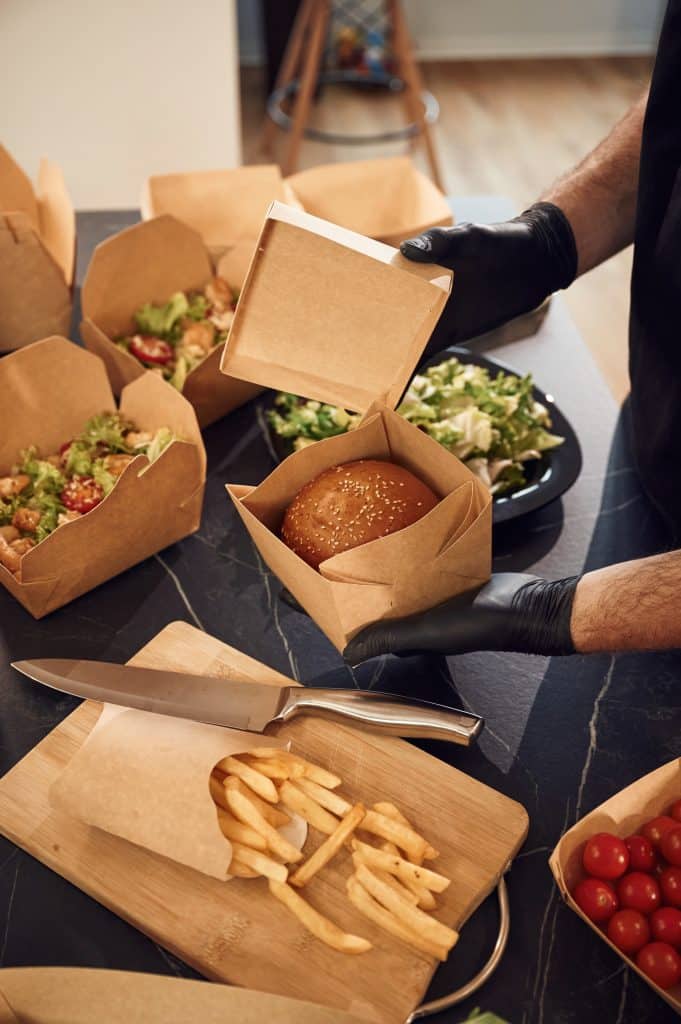
What “Five Dinners a Month” Actually Looks Like
Five feels like a random number, but it’s close to what a lot of households already do without noticing. One delivery order a week, plus one extra on a rough day, adds up fast without ever feeling excessive.
It doesn’t have to be delivery apps specifically. Pizza night, a drive-through run because nobody planned dinner, a sit-down meal out that was really just “too tired to cook” in disguise. They all count toward the same total.
If you tallied your own month right now, the number might surprise you. Most people underestimate it until they actually count.
Part of that is how the spending gets split up. A grocery bill shows up as one number once a week, so it registers. Five separate takeout charges scattered across a month tend to feel smaller individually, even when the total is larger.
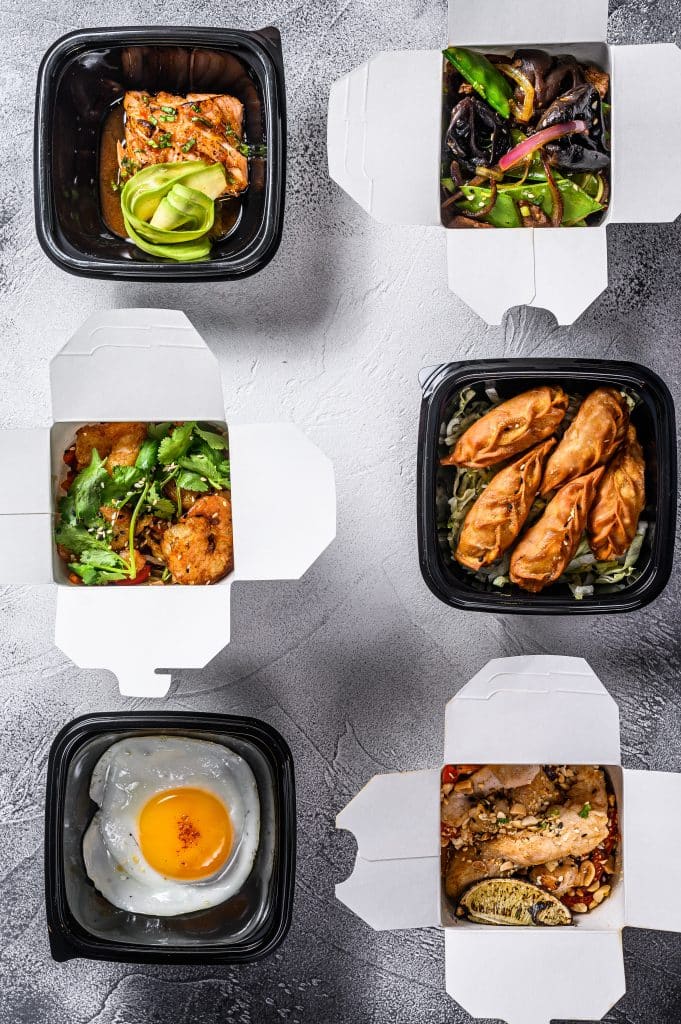
The Actual Math
A takeout dinner for a family typically runs somewhere between $50 and $90 once fees and tip are included, depending on the order and where you live. A home-cooked version of a similar meal usually lands closer to $15 to $25 in grocery cost for the same number of people.
|
Money Stuff
31 Money "Mistakes" Experts Say You Should Stop Feeling Guilty About
|
Multiply the gap by five dinners, and you’re typically looking at a difference of roughly $175 to $325 a month. Over a year, that range often works out to somewhere between $2,100 and $3,900.
Those figures are a hypothetical illustration, not a prediction or a promise. Your actual numbers depend heavily on order size, delivery fees, and what your grocery prices look like locally.
The Fees Nobody Adds Up
The menu price is never the real price. Delivery fees, service fees, and small order minimums typically stack another 15 to 30 percent onto a total before tip even enters the picture.
A $30 order can quietly become $42 or $45 once everything is added, and most apps show that final number in smaller text than the food itself. It’s not hidden exactly, just easy to skim past.
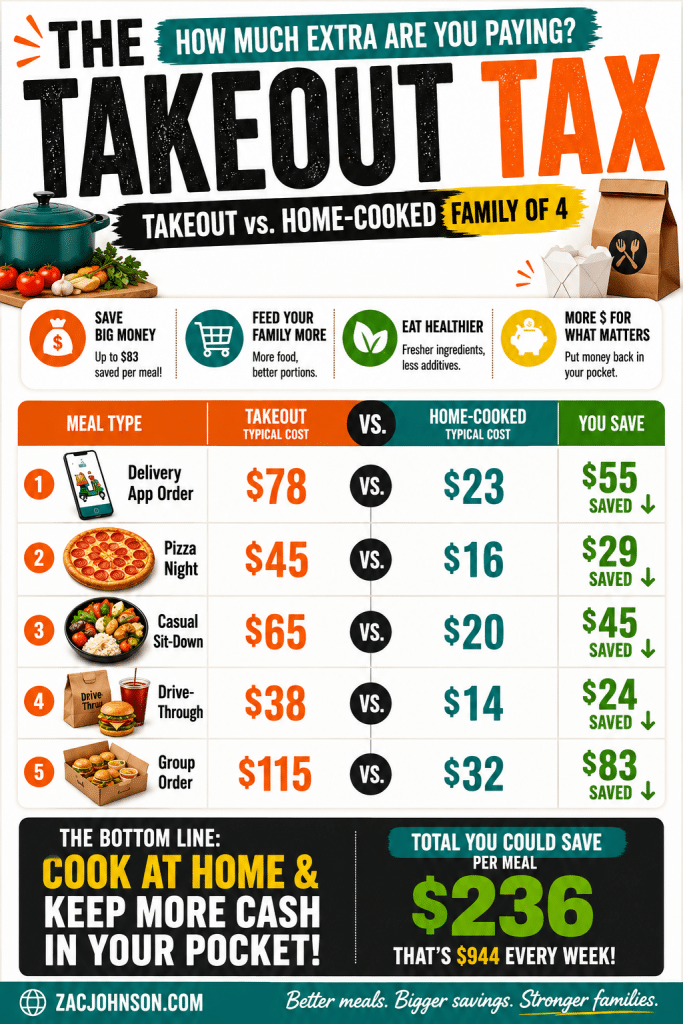
This is part of why the gap in the table below tends to run wider than people expect. It isn’t really “food costs more when someone else makes it.” It’s food plus a stack of separate small charges that rarely get counted as one number.

The Price Difference, Side by Side
Some dinners have a bigger gap than others. A rough breakdown, per typical order for a family of four, looks something like this.
| Dinner Type | Typical Takeout Cost | Typical Home-Cooked Cost | Rough Gap |
|---|---|---|---|
| Delivery app order | $60 – $95 | $18 – $28 | $40 – $67 |
| Pizza night | $35 – $55 | $12 – $20 | $20 – $35 |
| Casual sit-down meal | $50 – $80 | $15 – $25 | $30 – $55 |
| Drive-through run | $30 – $45 | $10 – $18 | $15 – $27 |
| Group order (large family or gathering) | $90 – $140 | $25 – $40 | $55 – $100 |
Methodology note: these ranges are rough averages built from typical menu pricing, delivery fees, and general grocery costs, not a study or survey. Treat them as a starting point for your own math, not a fixed number for every household.
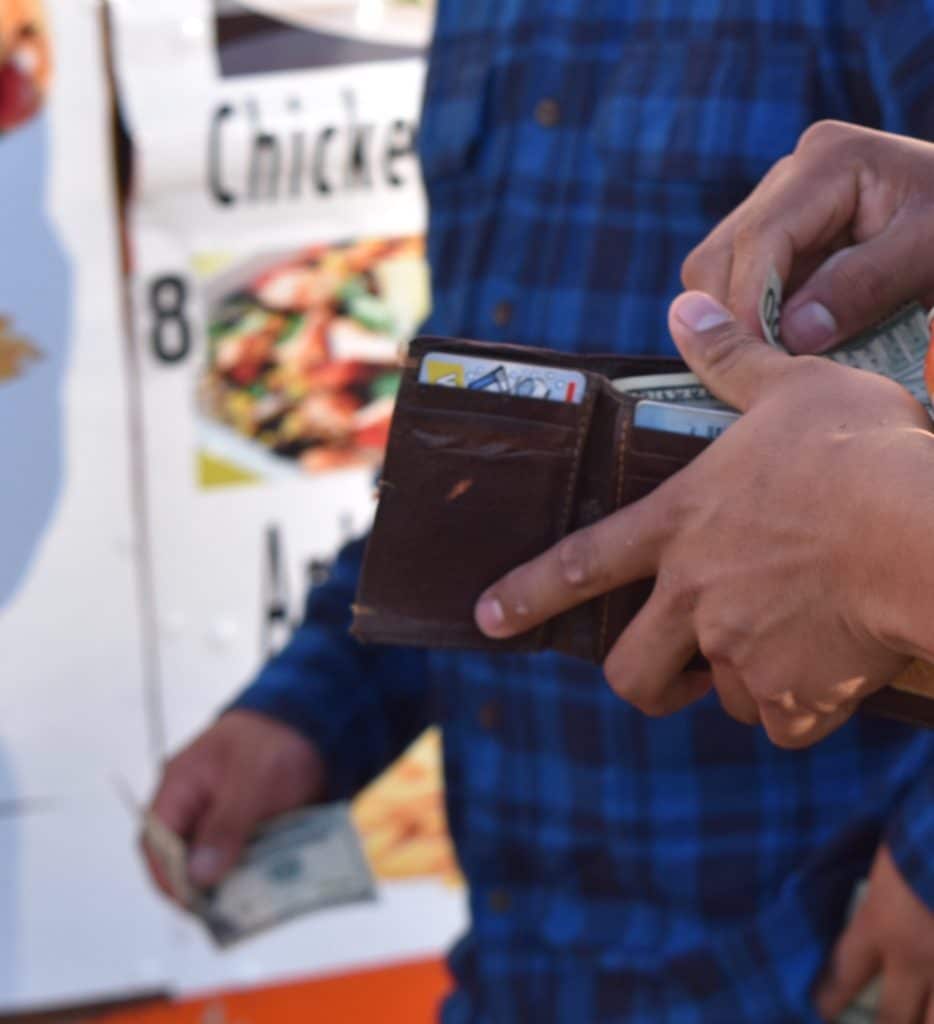
What That Gap Actually Buys Back
Here’s where it gets interesting. That $2,000 to $4,000 range isn’t abstract once you attach it to something specific. It’s close to a starter emergency fund, or a real dent in the smaller leaks that quietly drain a budget over time.
It could also just be the difference between a stressful December and a calm one, or the gap between carrying a balance and not carrying one. Where the money actually goes once it’s freed up is a personal call this article doesn’t make.
| Keep Reading — 18 Signs You're Actually Better With Money Than You Think |
What matters more than the destination is that it becomes a choice at all. Money that leaves quietly through five easy nights a month never gets the chance to be pointed anywhere on purpose.
The Trade-Off Check: pull up your bank statement, search for delivery and takeout charges from the last 30 days, and add them up. Compare that total to the ranges above before you decide anything.
A Smaller Household Version
Not every household is feeding four people. The same math still applies, just at a smaller scale, and it’s worth running separately if it’s just you or you and a partner.
A solo takeout dinner typically runs $18 to $30 once fees are included, against $6 to $12 for a home-cooked version sized for one. Five of those a month puts the gap closer to $60 to $110, or roughly $700 to $1,300 a year.
Smaller number, same shape. The point isn’t to hit a specific dollar figure. It’s to see your own version of this trade clearly enough to decide on it instead of drifting into it.

Where This Falls Apart
Here’s the honest part. Takeout isn’t automatically a bad habit, and treating it that way misses what it’s actually buying on nights when cooking isn’t realistic.
A single parent working a closing shift isn’t failing at money by ordering dinner. Neither is a household running on no sleep with a new baby. Sometimes the trade is worth it, and the guilt around it is overstated more often than the savings advice admits.
The point isn’t zero takeout. It’s knowing which nights are a genuine trade for time or sanity, and which ones are just autopilot. Those two things get lumped together constantly, and they shouldn’t be.

The Swap, Not the Sacrifice
You don’t need to cut all five dinners to see a real difference. Cutting two, and replacing them with something genuinely easy to cook, usually covers most of the gap without feeling like deprivation.
|
You might also like
18 Warehouse Club Buys Ranked: What's Worth It in Bulk (And What Never Is) →
|
This is closer to what a lot of old standby family dinners were built for in the first place. Fast, cheap, and repeatable, not fancy. A rotation of four or five of those meals removes most of the “too tired to think” excuse that leads to ordering out.
Buying pantry basics in bulk from a warehouse club can lower the home-cooked side of the math even further, though it only pays off if you’re actually using what you buy.
Combine that with a couple of frugal habits that sound extreme but quietly work, and the gap in the table above tends to widen in your favor.
Try the Half-Swap: pick your two least-essential takeout nights this month and replace them with something you can make in fifteen minutes or less. See how much of the gap that alone closes.

What This Actually Buys You
The takeout habit isn’t a moral failing, and it isn’t free either. Both of those things are true at once, and most advice on this topic only wants to admit one of them.
If you only take one thing from this, let it be the math, not the guilt. Run your own numbers using the ranges above, decide which nights are worth it to you, and treat the rest as a choice instead of a default.
For more on separating the habits that actually cost you from the ones that don’t, this look at “bad” money habits that don’t deserve the guilt is a good next stop.
And if the small stuff is what you’re after, a few weird money-saving habits that quietly pay off pair well with the swap approach above.